Read Recipe
Review steps and timing before starting
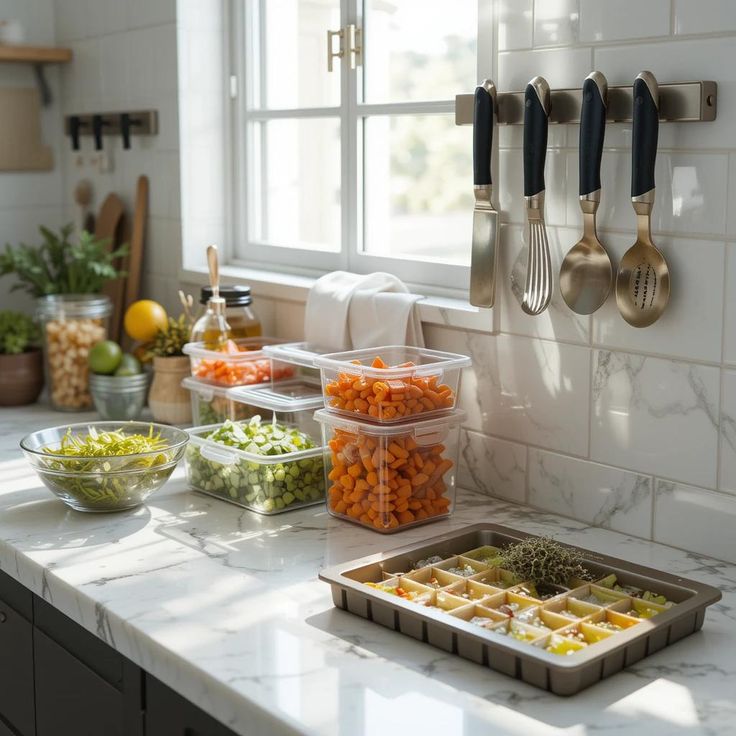
Cooking sessions run more smoothly when preparation follows a repeatable sequence. Our educational guidance covers time blocking, mise en place habits, and batch strategies. This is workflow advice only — not nutritional or medical guidance.
Gathering and preparing ingredients before heat is applied reduces mid-cooking chaos. This practice scales from simple weeknight dinners to multi-component weekend sessions.
Review steps and timing before starting
Portion dry and liquid ingredients
Wash, chop, and arrange components
Execute steps without pausing to search
Clean surfaces before next session
Batch cooking does not mean eating identical meals for five days. It means preparing versatile base components — grains, roasted vegetables, cooked proteins, sauces — that combine differently across the week.
Our educational guides outline three batch intensity levels: light (one hour), moderate (two hours), and extended (three hours). Choose based on your available Sunday or mid-week evening window.
Light batch: wash and chop produce for three days ahead
Moderate batch: add one grain and one protein preparation
Extended batch: include sauce, soup base, and freezer portions
After a moderate two-hour session, a typical household might have: two cups cooked quinoa, one tray of roasted mixed vegetables, portioned grilled chicken strips, and a jar of vinaigrette. These components assemble into bowls, wraps, and salads across four weeknight dinners.
Actual quantities depend on household size and appetite. Our consulting sessions help calibrate batch volume to your specific context.
Understanding which tasks run simultaneously versus in sequence prevents bottlenecks at the stove and oven.
Rice simmering, dough resting, or stock reducing. Start these first to utilize waiting periods for active prep work.
Chopping, stirring, and plating require direct attention. Schedule these during passive task windows when possible.
Combining pre-prepped components takes minutes. Reserve this phase for the highest-traffic kitchen hours.
Build five to ten minute buffers between courses or components to accommodate minor timing adjustments during preparation.
A menu plan only delivers value when execution is consistent. These practices bridge the gap between what is written and what reaches the table.
Each morning, confirm which planned meal remains feasible given schedule changes. Swap days within the same week rather than abandoning the plan entirely when conflicts arise.
If Tuesday's planned meal requires forty-five minutes but you have twenty, exchange it with Wednesday's fifteen-minute assembly meal. Update your shopping list only if ingredient gaps appear.
Before turning on any appliance, verify all mise en place items are within reach. Missing one ingredient mid-cook disrupts timing and increases error likelihood.
When using oven and stovetop simultaneously, note start times on a small whiteboard or phone timer. Stagger dishes so finishing times align within a ten-minute window.
Cooking efficiency grows when you repeat core techniques across different recipes. Our programs emphasize skill transfer rather than recipe memorization.
Master heat control and movement patterns applicable to vegetables, proteins, and aromatics across cuisines.
Learn tray spacing, oil distribution, and doneness indicators that apply to root vegetables, proteins, and sheet-pan meals.
Combine base, protein, vegetable, and sauce components in consistent proportions without relying on rigid recipes.
Plan one weekly slot specifically for repurposing leftovers into new formats — wraps, grain bowls, frittatas, or soups. This reduces waste and simplifies shopping lists.
Cook slightly larger batches of versatile components rather than complete duplicate meals. Extra roasted vegetables become lunch additions; surplus grains fill breakfast bowls.
Transfer cooked food to shallow containers within two hours. Label with contents and date before refrigeration or freezing.
Reheat only the portion needed for the current meal. Repeated full-container reheating degrades texture and can affect food safety over multiple cycles.
Weeknight cooking succeeds when the majority of work happened earlier in the week. This framework assumes batch components are available from a prior preparation session.
Pull batch components from refrigerator. Confirm all items are present and check labels for freshness dates.
Sauté fresh additions, warm pre-cooked proteins, or prepare a quick sauce to complement existing components.
Combine base, protein, vegetables, and sauce. Adjust seasoning and garnish before serving.
Wash cutting board and utensils used during assembly. Store unused batch components with updated labels.
We teach workflow, timing, and preparation techniques. Sample meal ideas appear in educational materials as illustrations, not prescriptions. We do not create clinical meal plans or therapeutic diets.
Yes, with scaled quantities. Single-person batch sessions typically run forty-five minutes and produce two to three days of versatile components rather than full duplicate meals.
Programs accommodate beginners through intermediate home cooks. Content focuses on organization and workflow rather than advanced culinary technique. No professional training is assumed or required.
We can help organize allergen-aware kitchen zones and label systems. However, we do not provide allergy management plans or substitute ingredient recommendations with clinical authority. Consult an allergist or registered dietitian for medical guidance.